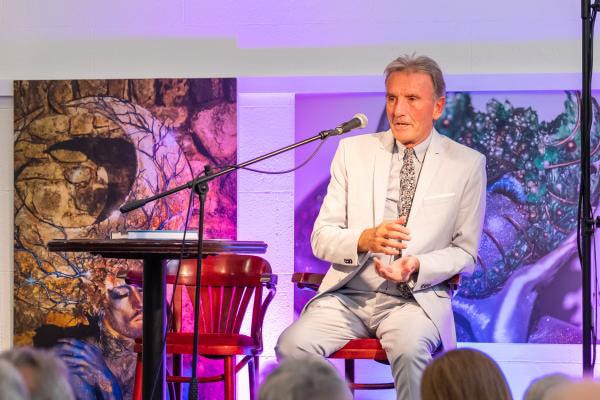


For the last 29 years, I have been engaged in legal activism both in legal practice and through my role as a consumer and human rights advocate. That advocacy has brought me into contact with many public officials across the UK, Europe, the USA and Australia. It has also brought me into close contact with journalists, many of whom were keen to report the detriments suffered by individuals and how authorities intended to resolve these deficits, or not as the case may be. This was certainly the case with local democracy reporters who would simply contact me to ask questions about councillors codes of conduct, freedom of information requests through to the more serious allegations arising from their investigations. In truth, I had little experience of how local democracy functioned, but the legal theories behind their requests were essentially the same and I was always happy to guide those journalists.

In the UK, we’ve seen a great deal in the headlines since 2024, about the apparent strictures around planning, and how they were responsible for applying a downward pressure upon delivering developments within communities. The catalyst for recent commentaries centres around two issues: the apparent demographic demand for housing and an equal high demand for social housing.
When the Starmer government came to power in 2024, grand ambitions were announced for a national home-building programme. Within that declaration of intent, they also announced that they were introducing mandatory housing targets for local councils, increased impetus on existing and new development plans, maintaining the brownfield land approach but introducing a common-sense approach to the greenbelt and causing councils to review greenbelt boundaries, prioritising low-quality grey-belt land, introducing ‘golden rules’ for greenbelt land by requiring developers to provide infrastructure for local communities and social housing.
This was further strengthened by the same government taking on the ‘blockers’ from preventing housing developments, in order to save bats and newts. Starmer announced those changes in early 2025 by stating:
“Nuclear plants, trainlines and windfarms will be built quicker thanks to changes to the rules to stop blockers getting in the way of the government’s Plan for Change….The new common-sense approach doesn’t allow newts or bats to be more important than the homes hardworking people need, or the roads and hospitals this country needs”.
But lest those who know me think that I am picking on their favourite political flag, then here is another eye-watering set of proposals from the Tories. (declaration: I have never been a member of any political party because of my early employment and subsequently because of my legal & activism work).
At the recent Conservative Party conference in Birmingham, the new Shadow Chancellor announced a new planning policy to be included in their next manifesto, stating:
“Now we are announcing radical supply-side reforms that will ensure the homes we need actually get built….We will scrap unnecessary net-zero housing red tape that is stopping developers from building and driving up the cost of housing. We will ditch the Future Homes Standard and Part L of the Housing Regulations. All in all, we will cut the cost of delivering and therefore buying a new home by up to £50,000”.
Note the oft used phrase deployed since 2016 of ‘common-sense’ (which is hardly an objective approach), to scrapping ‘red tape’ (that’s regulation to you and me).
When you look at these political announcements, you have to wonder how on earth is a changing world and society, supposed to deal with about-turns or the latest fad that appears to offer denialism against a juicy carrot to voters. Worse still is the categorisation of ordinary people with genuine concerns or professional environmental groups as ‘blockers’ or ‘nimby’s’ — a tactic I saw used by commercial entities against travel consumers to sometimes publicly ridicule or cause them to recoil from the insult made and their complaints. In those cases I always challenged name-calling in the media and those uttered by elected officials with simple hard facts and evidence.
For the last 3 years I have been engaged in challenging the local authority on how they understand and manage air quality arising from traffic emissions in my area. It may make you smile to read of my involvement in this area, but since 2006, I have been very active in advocating for consumers on aircraft cabin air quality. The issues arising from those toxic events and the methodologies that are used or should be used, are equally applicable for consideration in ground-based scenarios.
So for example, I have challenged them why they didn’t test beyond nitrogen dioxide to determine the true nature of what the local town’s citizens may be breathing in, creating a conversation around the range of chemical compounds said to be reliably found from traffic emissions. The response informed me that they were following the law and had the approval of DEFRA and the Welsh Government. To many that might seem reasonable. But when you examine the very documentation they rely on, you realise that they enjoy a wide discretion to deploy measures to improve their data-sets, so for example, they are ‘encouraged’ to monitor for PM2.5 which is a reliably found chemical compound marker.
I have also challenged why other methods weren’t used to understand what kind of chemical compounds exist within our traffic-emission environment, such as through swab or drain sampling, modelling topography, weather and vehicle volumes and types, using low cost monitoring solutions (including recruiting local residents with new cars and their onboard environmental monitors), reacting to public and local citizen science concerns on particulate matter, and above all, using the precautionary principle.
The ping-pong of exchanges between myself and local civil servants ultimately resulted in my creating a two column table, identifying the local authority’s position and my own — revealing a chasm that was not resolved by the offer of a meeting to try and resolve areas of disagreement for the benefit of the local community.
As I was approaching the end of that process, the local authority began holding meetings and comment sessions, inviting those with an interest in their development plans, to provide their views and to make submissions. With great controversy, the local revised plan was eventually adopted, sending it then into the next process for scrutiny by the planning inspectors.
The entire process began with a flurry of local meetings that were standing room only in an attempt to define the issues and what should be done next. I opted to speak to air quality arising from traffic emissions and duly made the necessary submissions throughout the process.

In response to these plans, others were concerned about the colony of bats on one of the planned developments, others were concerned about flooding risks, aesthetics of the developments, historical monuments, extra pollution into one of the town’s rivers, the actual state of the current pollution to that river, extra traffic, a lack of infrastructure to service the needs of new residents, a lack of transport options, the potential destruction of a place of natural beauty and so many other aspects of concern were expressed.
The evidence has amounted to thousands of documents and pages; it is celebrated to represent an exercise in how democracy works.
But as time has advanced, the number of ordinary people willing to remain committed has dwindled, shocked it seems by the fact that they do not believe that the authorities are actually listening to them. I saw that point further afield when I was contacted by people in other communities trying to make arguments on traffic emissions and chemical compounds they claimed was also of concern in their communities. They were in some ways feeling that they were over their heads, that matters were beyond their technical expertise, some were speaking publicly for the very first time in their lives.
My own experience through this process witnessed residents being publicly derided as ‘nimby’s’, I was prevented from speaking at one public event because the officials deemed that one representative was enough for the community, despite a formal complaint. Others reported to me that they had made submissions but never received any acknowledgement and so removed themselves from the process. In my case, whilst my initial submission was acknowledged, it wasn’t formally recorded in the bundle of documentation. As a result I had to challenge and threaten to make a formal complaint about the way in which I was being dealt with. Speaking with elected officials you had the sense that on air quality, they had no understanding of the importance of the issue, particularly in light of the sad but excellent Ella case and campaign.
I had a growing sense that air quality was not something to be discussed.
However, other elected officials were helpful and supportive and from my perspective, recognised that there was a wider community concern on particulate matter.
In later hearings I have witnessed people from being prevented from speaking or interrupted on the basis that what they had to say had been dealt with in earlier sessions and in any event, they had already made their points in their written submissions. You may think that this is a fair point, but, when you are faced with an initial set of questions and then subsequently presented with a new set of highly technical questions as the process advanced, you can see how people struggle in what is after all a professional planning environment.
I was surprised to also learn that even though earlier public sessions were recorded and published, later sessions were are not recorded, which in my opinion, doesn’t exactly help the transparency of process point. Of course the argument would be made that everything is written down and that protects transparency along with the evidence sessions and submissions. A fair point. But, having had the experience in recording contemporaneously, the words of those I had arrested in my earlier career, whilst dealing with people with different accents and abilities to express themselves, their speeds of speaking, or making themselves clear, I could never claim that my record was completely accurate and of course, that profession went on to digitally record all interviews in order to secure that transparency.
From beginning to end, it has been a struggle to be heard on the issue of air quality. Earlier engagement didn’t initially present with that difficulty of experience, but as the process has advanced, I have had to fight for and complain for the right to be heard on air quality both in person and in writing (for those wondering, this is proved by my e mail exchanges with the authorities).
To balance these experiences, it is important to look at this from the local authority’s perspective. It is their right to present, be heard and to be able to challenge perceptions or rethink or introduce new evidence, in order to bring forward to a successful conclusion to a political policy for the benefit of a community and its new members. It is also the right of other public bodies to scrutinise and examine carefully their proposals. Experience of these sessions delivers with it a range of professional expertise that helps the local authority to present legitimacy of process, and that should be so.
But I have also witnessed citizens failing to understand the nature of a process and of how the other party also has a right to be heard. Whilst I saw impatience and dismissal of people and their concerns (raising as I did in writing, important Human Rights cases that supports their rights to be heard), some citizens were equally quick to dismiss the official side of the coin.
Whatever about these experiences, the next stage in this planning caravan will be for the Welsh Government to approve the plan if it is passed by the Inspectors. The plan may be required to deliver variations — of course the Inspectors could reject the plan and that would send it back to the drawing board. If it were approved, then the local authority would adopt it. Thereafter, it then follows the process of formal planning applications.
In respect of air quality, I presented that the formal planning process would be a process too late.
I have argued that the obligations, contained in National Welsh Policy, not to create developments that exacerbate existing poor air quality or worsens the air quality of an existing development were not clearly reflected within the local development plan, there was only a basic representation of those national planning policy obligations.
I expressed the view and concern that the formal planning stage would be perfunctory, citing as I did environmental reports commissioned by developers in other areas, that concluded almost universally, that there would be no environmental problems.
On reflection, if I were to engage in that formal planning stage, I would have to ask and examine the construction of the formal letter of instruction for that environmental report, how would it be formulated (would it for example, contain bias, limitations or omissions), and what would be contained within the evidence presented to that expert so that they could make their conclusions? As I see it, it is an important public interest issue and one that cannot be avoided, particularly if such a process is described as ‘independent’.

Following my representations, the point about applying a better narrative from the National Wales Policy on air quality, and its effect on communities within the local plan, within a feature known as ‘residential amenity’ (which is defined as containing ‘public interest’ value), is to be considered for an amendment by the local authority as an action point from the Inspectors.
It is a small step, and we shall see just how effective advocacy and challenging a less than satisfactory policy expression on air quality in the local plan will manifest itself. All of which of course brings me nicely back to my own initial challenges three years ago on the methodology and nature of monitoring and outcomes on air quality for our community and its concerns and how this journey began!
I have to say, after all my years of experience, this is probably the most difficult process I have experienced, partly because of its cumbersome nature and partly because of the status of ordinary people and their voices.
I have a sense that it is more of an adversarial process rather than an inclusive process, though I accept that there will be others who will reject that; I would counter be stating that the process through experience builds perceptions.
Perhaps this is unintentional, when it clearly needn’t be.
For example, I have expressed that a local development plan, before being put to public scrutiny, should be codesigned with the very people who live in an area. Some may feel that this would not be achievable, but I argue that if the strength of a development argument is sound, you can find a consensus.
Equally, whatever about planning or local government officials, ordinary people should be heard, irrespective of whether the points they wish to make have been previously heard. It should be recognised that many issues rarely travel in a straight line. People should be treated with patience and respect in what is a difficult and highly technical process. I also consider that patience and respect applies to local authority and other public officials also.
Above all, there should be clearer processes, roadmapped and signposted so that ordinary people can understand the direction of travel. Citizens should be automatically updated by e mail with programmes, agenda and indeed indications of areas relating to their specific interest beyond a particular site designation where discussions may be had. I think that is a reasonable point, because logically, a local authority is likely to receive such automatic updates — there should be an equality of arms.
There should be a consistency in questions, along with providing technical explanations to ordinary people. A demonstrable value to citizen contributions should be given through providing sufficient time in a council chamber to express themselves, but overall, to give them the sense that they have been heard no matter the forum.
There are some reading this, perhaps local politicians and other officials, who may feel that my genuinely expressed views and criticisms are wrong, but I would say, how do you know until you actually speak to the so-called ‘blockers’ of this world?
Who knows, the quiet revolution of actually listening and changing and improving processes might actually make a difference to the entire planning process, instead of the all-change, catch-phrase, sound-bite announcements & policies made by Westminster politicians?
(All rights reserved © 2026. This is the Article for ‘‘Activism and the road through Planning & Local Democracy”. No reproduction, reuse or manipulation, in any form, either by human endeavour or by any form of software, algorithm or Artificial Intelligence system(s), in any jurisdiction, without the express written permission of Frank Brehany).